

This CySA+ vs Security+ comparison examines two of CompTIA’s most respected cyber security certifications. Both are valued by employers and cover a wide range of security concepts, but they differ in focus, difficulty, and the level of experience they expect.
Understanding the differences between CySA+ and Security+ is essential when it comes to choosing the right path and preparing effectively. This guide provides a clear, up-to-date breakdown of both certifications, including the latest CySA+ exam structure, so you can make an informed decision.
What are Security+ and CySA+ Certifications?
CySA+ (Cybersecurity Analyst) and Security+ are two fairly broad-based cyber security certifications. They are devised and governed by CompTIA, (The Computer Technology Industry Association), one of the world’s foremost IT industry skills development bodies.
Security+ and CySA+ are vendor-neutral certifications; i.e. they are designed to test your knowledge and know-how across a range of IT environments and services, rather than focusing on specific ecosystems such as Microsoft Azure or Cisco products.
They also share characteristics in terms of testing methods and aims. In the exam for each qualification, you’ll find that CompTIA focuses squarely on the practical application of knowledge in real-life situations; something that’s demonstrated in the inclusion of hands-on style “Performance Based Questions” (PBQs) in each case.

Take a look at this StationX skills roadmap, and you’ll see that Security+ and CySA+ both sit within the third stage of skills development. In other words, they are both the type of accreditations you need to focus on if you already have a good general grounding in IT and networking, and are now ready to start building your cyber security knowledge.

However, although they are in the same broad development stage, they differ in complexity levels and purpose.
CompTIA Security+ focuses on validating a wide range of skills necessary to perform core security functions. CySA+ takes some of those baseline concepts and expands on them. This slightly-more advanced qualification is really designed for people who want to step into roles where the day-to-day work will focus on security analytics, intrusion detection and response, and blue team operations.
Here’s a closer look at what this means in practice.
About Security+

CompTIA describes Security+ as a certification that opens the door to your cyber security career.
It’s not an absolute beginner certificate as such; there is an expectation that you already have a strong grasp of IT basics and networking. However, Security+ is classed as entry-level so far as cyber security training is concerned.
Security+ covers a wide range of security-related topics at a fairly topline level. With this certification to your name, your are essentially telling employers that you know what it takes to do the following:
- Assess an organization’s security and recommend and implement appropriate solutions
- Monitor and secure a range of different IT environments
- Do your job with an awareness of laws, policies, and best practice guidelines
- Identify, analyze, and respond to security events and incidents




About CySA+

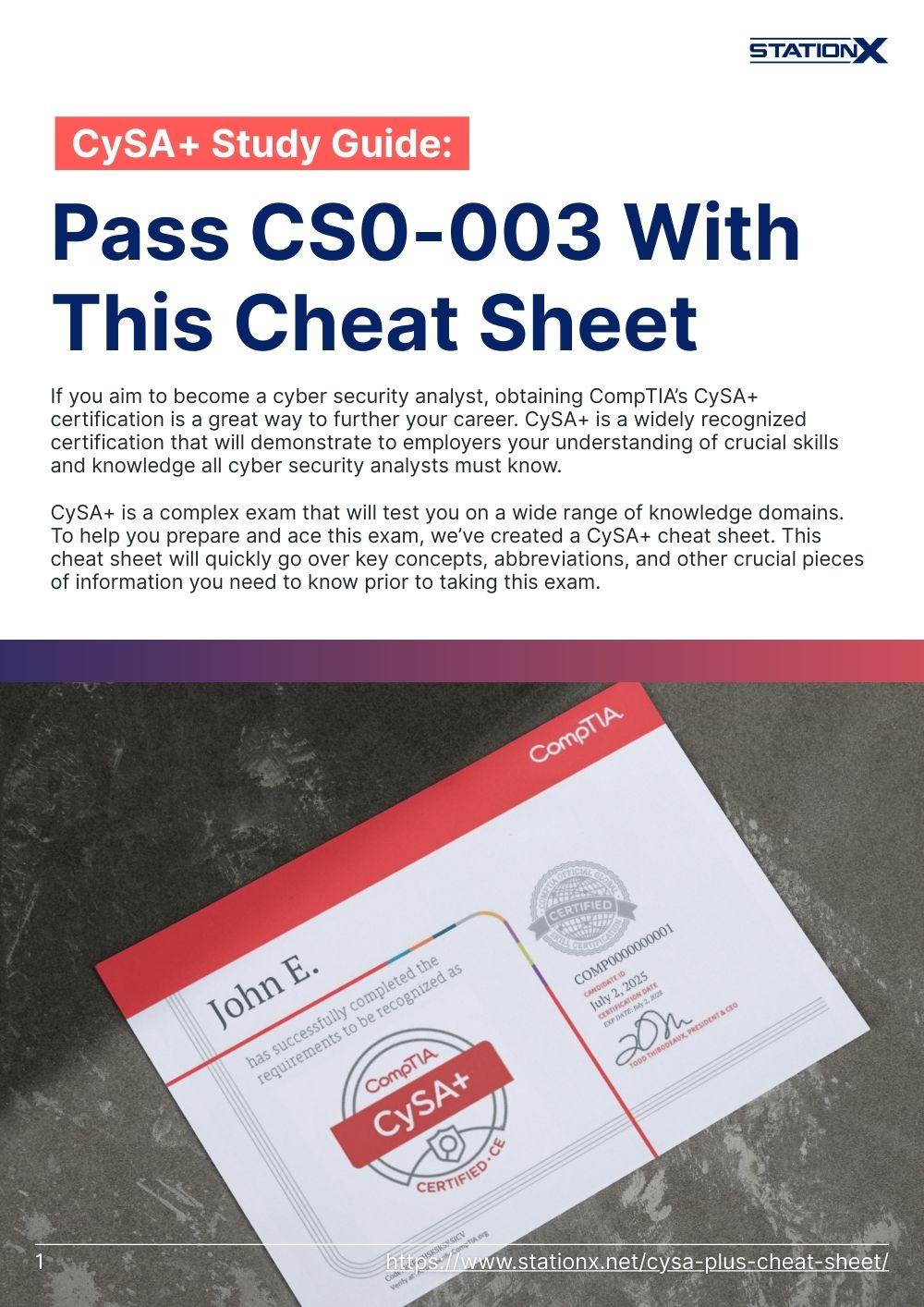
As its name suggests, CySA+ (Cybersecurity Analyst) is geared towards verifying your knowledge in the field of security analysis, along with the linked knowledge areas of incident prevention and response.
In contrast to the broader content range of Security+, CySA+ content is more narrowly honed on the skills you’ll need to deploy daily in specific job roles. These roles include the following:
- IT Security Analyst
- Security Operations Center (SOC) Analyst
- Vulnerability Analyst
- Threat intelligence Analyst
- Security Engineer
More specifically, with CySA+ to your name, you can show current and prospective employers that you know how to do the following:
- Use the right tools and techniques to perform security reconnaissance on a network or system.
- Collect and interpret security data
- Use network host and web app vulnerability assessment tools
- Apply ID management, authentication, and access control methods
- Participate in incident response teams and use forensic tools to identify attack sources
- Compile reports and recommendations with an understanding of industry best practice, frameworks, policies, and procedures

Career Progression and Certification Pathways
Security+ and CySA+ are early-to-mid level certifications, but they support different stages of your cyber security journey.
Security+ is typically the starting point, providing a comprehensive understanding of core security concepts, including threat mitigation, architecture, governance, and incident response.
CySA+ takes things a step further by focusing on the practical, day-to-day skills required for defensive roles, such as monitoring systems, detecting and analyzing threats, managing vulnerabilities, and responding to incidents.
In short, Security+ builds your foundation, while CySA+ helps you apply that knowledge in real-world security operations.
Where These Certifications Fit in Your Timeline
For most candidates, Security+ comes first. It’s designed to validate your core security knowledge after you’ve gained basic IT and networking experience. It signals to employers that you can understand and apply fundamental security concepts in real-world environments.
CySA+ fits further along the career timeline. It assumes that you already understand basic security principles and are ready to specialize. Many professionals pursue CySA+ after earning Security+ or gaining hands-on experience in a SOC or incident response role. It’s often seen as the bridge between entry-level certifications and more advanced accreditations like SecurityX or CISSP.
Typical Certification Pathways
There are a few common routes depending on your career goals:
Pathway to Blue Team / SOC Roles:
Network+ → Security+ → CySA+
This path builds the knowledge needed to move from general IT and networking into hands-on defensive roles. It’s ideal for those who want to monitor, detect, and respond to threats in real time.
Good for roles like SOC Analyst, Junior Threat Hunter, Blue Team Technician.
Pathway to Advanced Generalist Security Roles
Network+ → Security+ → CySA+ → CISSP
For professionals who want a broad, well-rounded mastery of cyber security concepts across management, risk, architecture, and defense.
It’s the path toward security leadership, compliance, and design oversight.
Works for positions like Security Analyst II/III, Security Architect, Security Manager, and GRC Specialist.
Pathway to Advanced Technical / Specialist Roles
Network+ → Security+ → CySA+ → Specialized Blue Team or Forensics Certifications
These certifications could include:
- EC-Council Incident Handler
- Computer Hacking Forensic Investigator
- GIAC Certified Incident Handler
- GIAC Certified Forensic Analyst
- SecurityX
This route focuses on deep technical expertise — the hands-on defenders who analyze, reverse-engineer, and respond to real incidents.
It’s the right track for those who prefer working in the trenches rather than management.
This track can lead to Incident Responder, Digital Forensics Analyst, Malware Analyst, or Threat Hunter.
Exam Details
Both Security+ and CySA+ are assessed via a single written exam.
In each case, you may take the exam online through the Pearson VUE remote exam proctoring service. Alternatively, you can choose to take it in-person at a Pearson testing center (a wise option if you don’t have easy access to a quiet workstation and reliable internet connection). Further details on arranging exams can be found in the CompTIA testing options guide.
Security+ and CySA+ exams both comprise a mix of multiple-choice questions alongside practical challenges referred to by CompTIA as Performance-Based Questions (PBQs).
With a series of PBQs, you might be presented with the approximation of a real-life environment (a terminal window, for instance) and a simulation of a series of events and asked to answer questions along the way.
Tip: these questions require practice. They tend to be worth more points than standard multiple-choice-questions, so not being prepared for them will cost you.
Security+ Exam Details
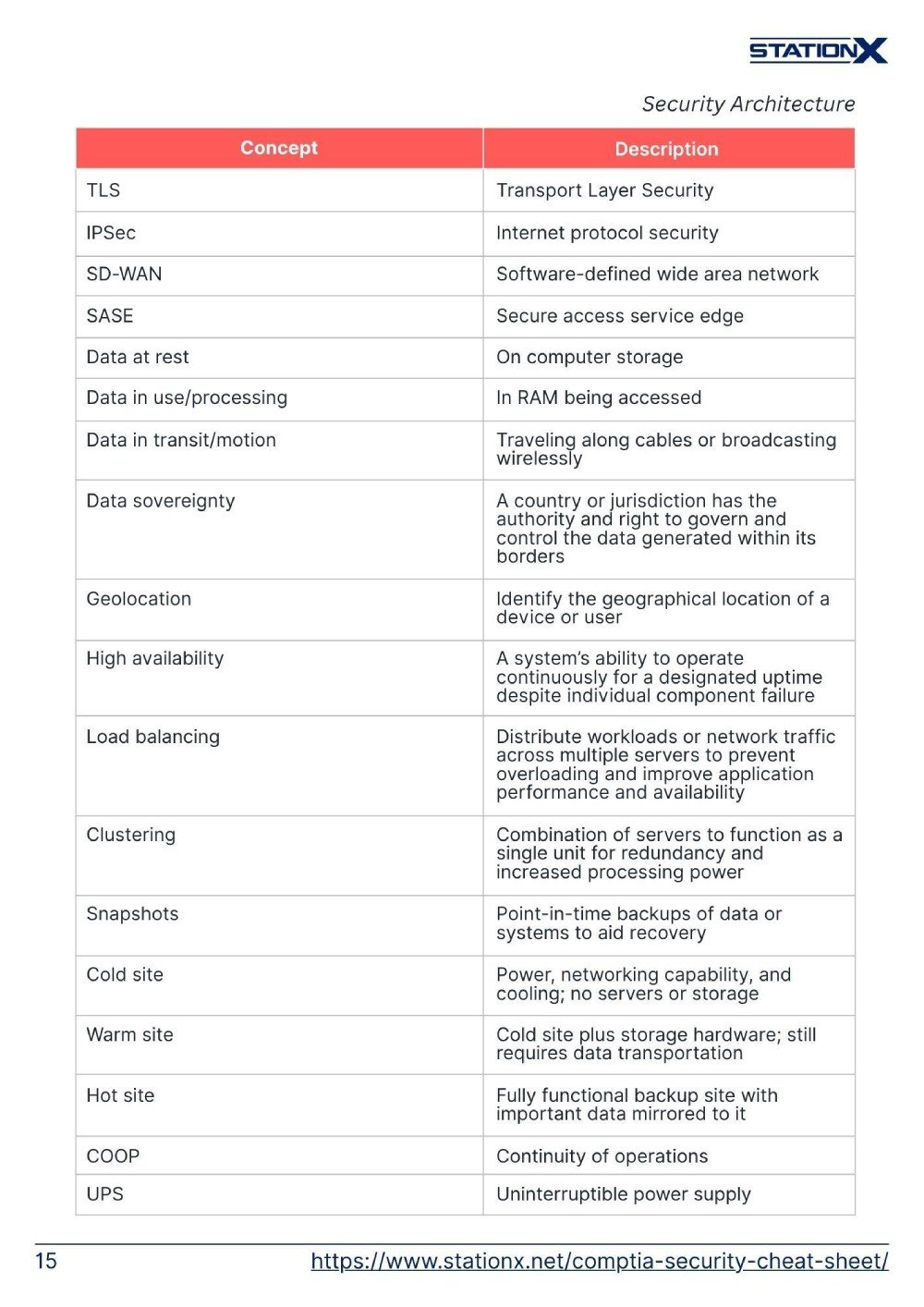
The current version of the Security+ exam is SY0-701. This is a 90-minute exam comprising a maximum of 90 multiple-choice and performance-based questions. It is scored between 100-900 with a passing score of 750.
The content is broken down into the following five domains:
- General Security Concepts (12%)
- Threats, Vulnerabilities, and Mitigations (22%)
- Security Architecture (18%)
- Security Operations (28%)
- Security Program Management and Oversite (20%)

A more detailed breakdown of the domains can be found in this Security+ cheat sheet.
CySA+ Exam Details
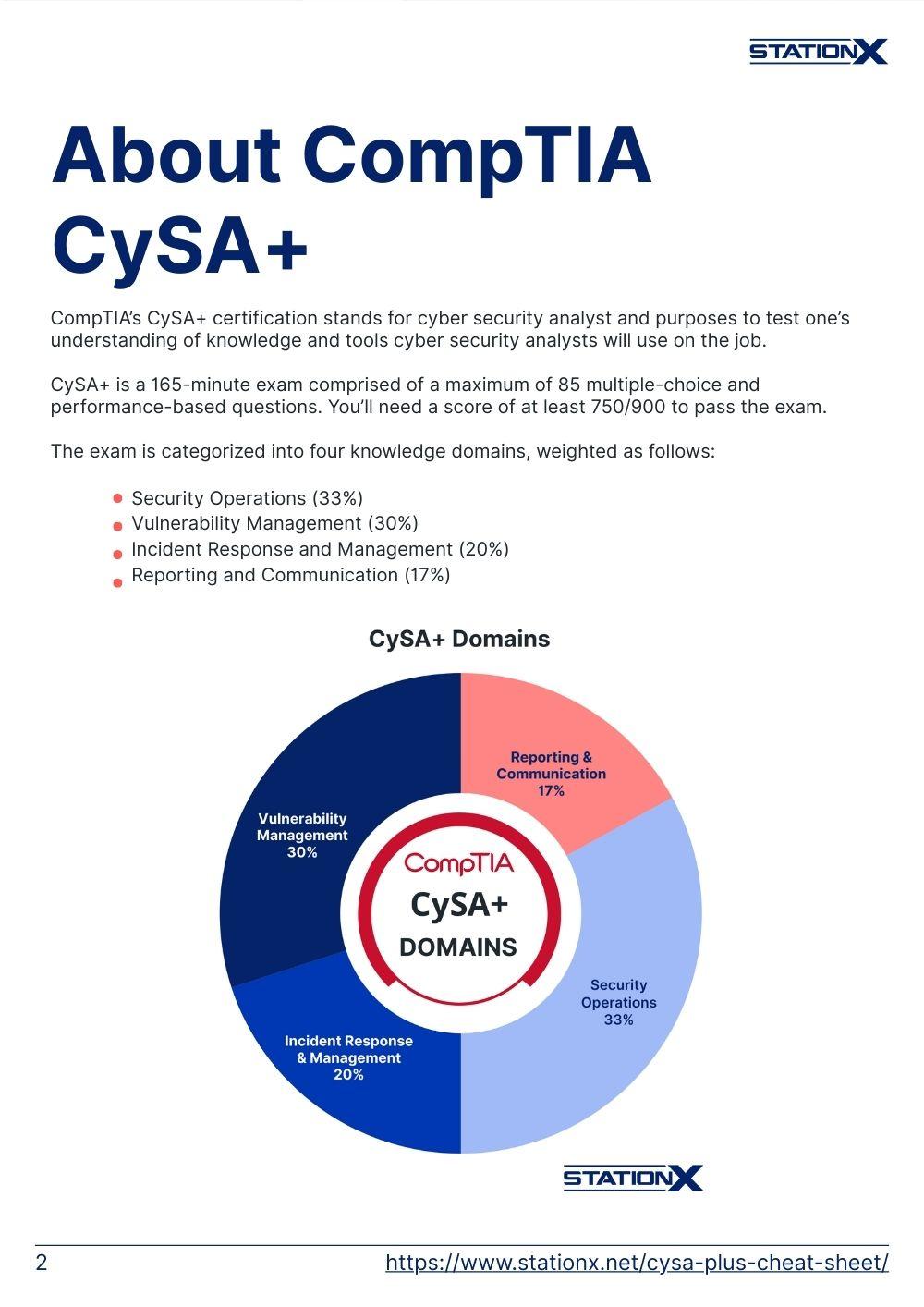
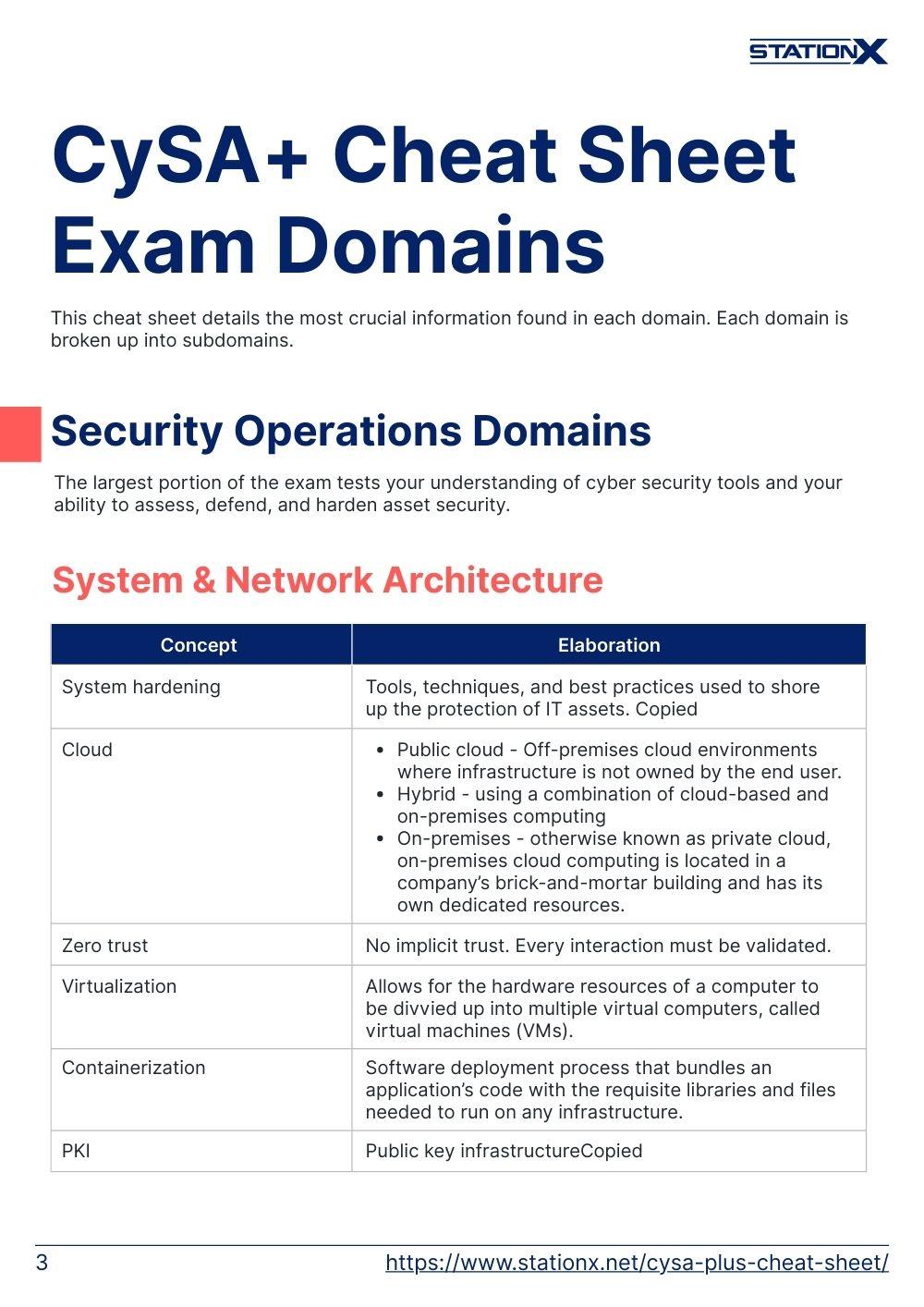
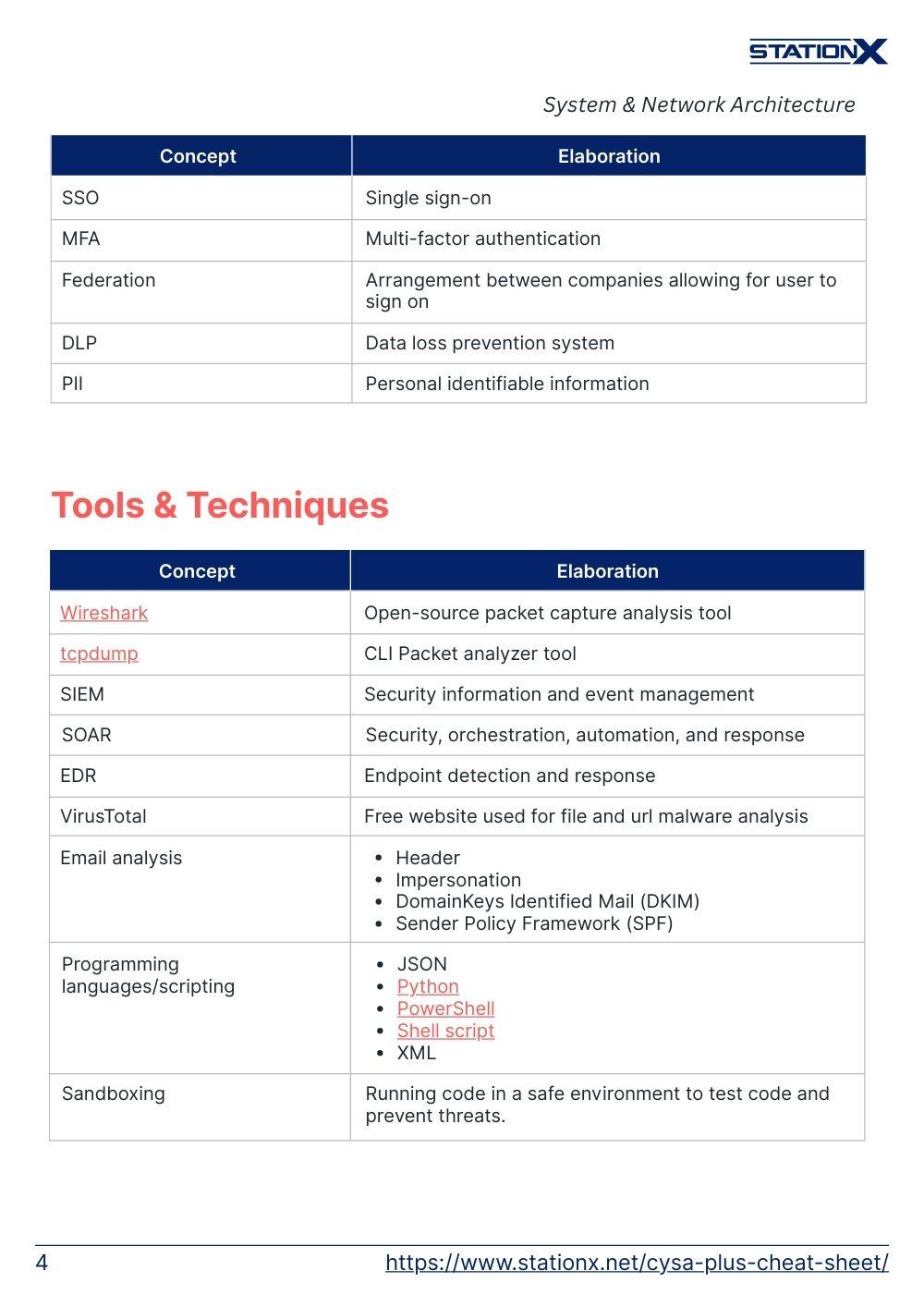
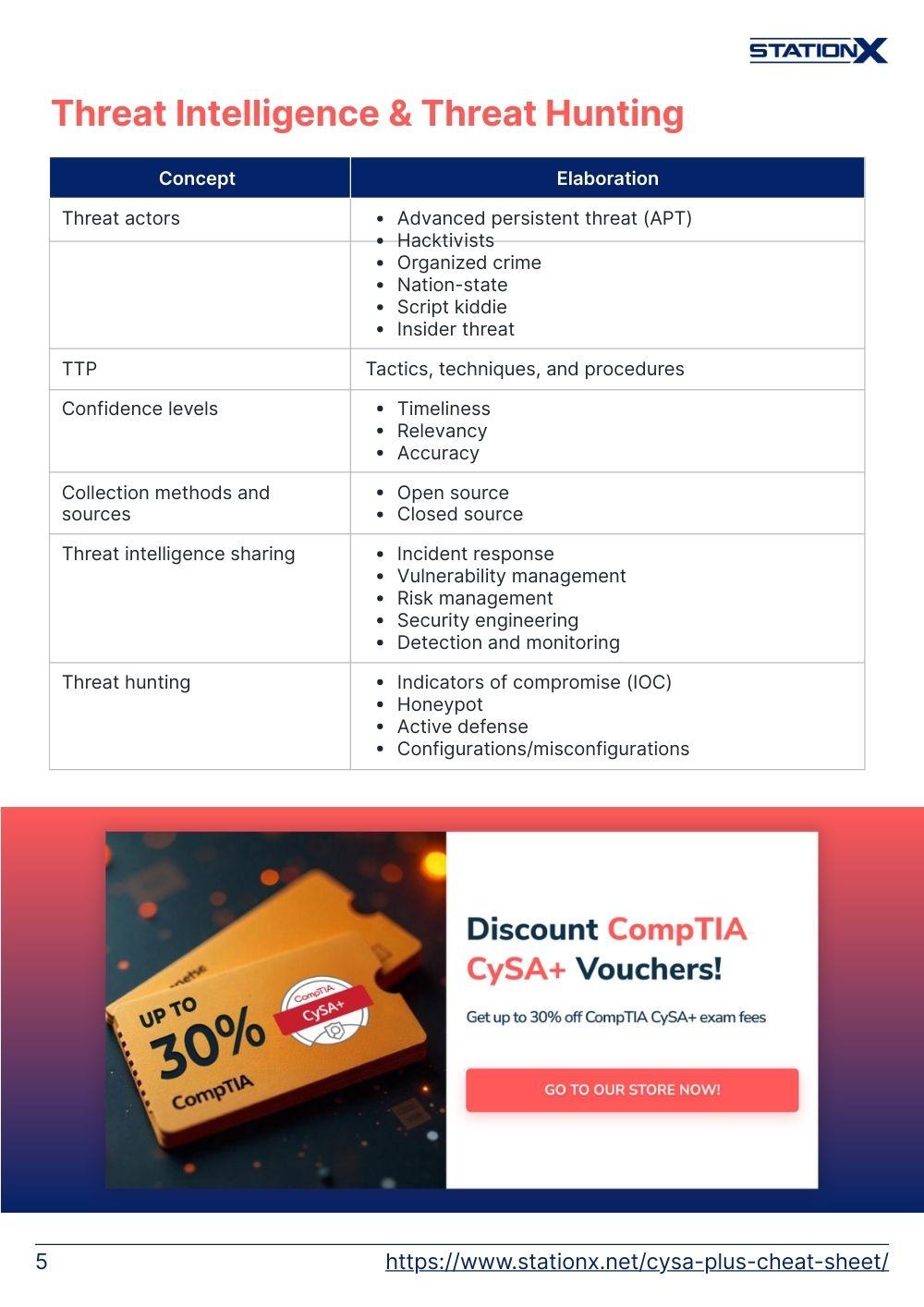
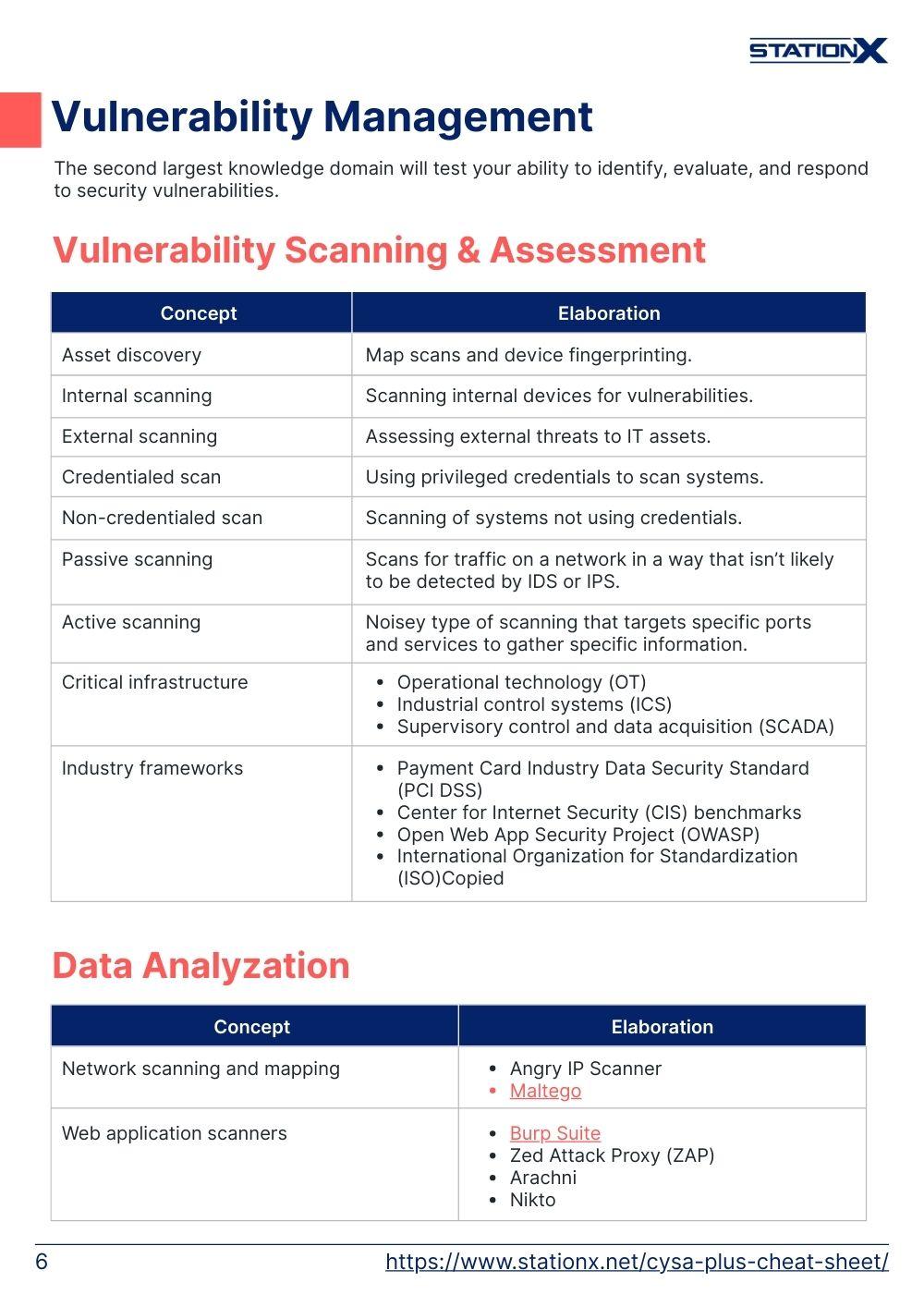
Please note that the CySA+ exam changed in June 2023. The current exam version is CS0-003. This is a 165-minute exam comprising a maximum of 85 multiple-choice and performance-based questions. Like Security+, it is scored on a 900-point scale with a passing score of 750.
The exam is broken down into four domains, weighted as follows:
- Security Operations (33%)
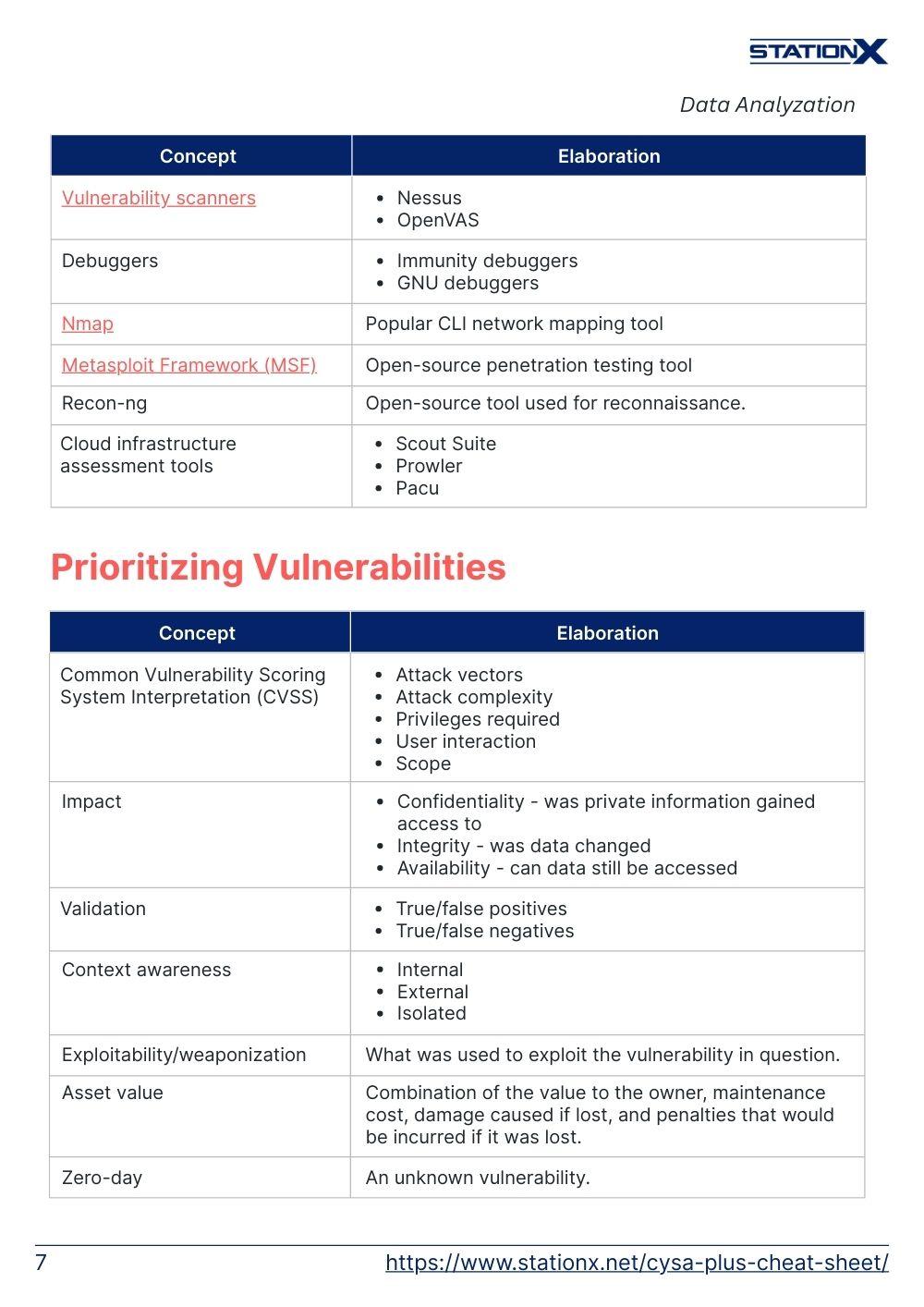
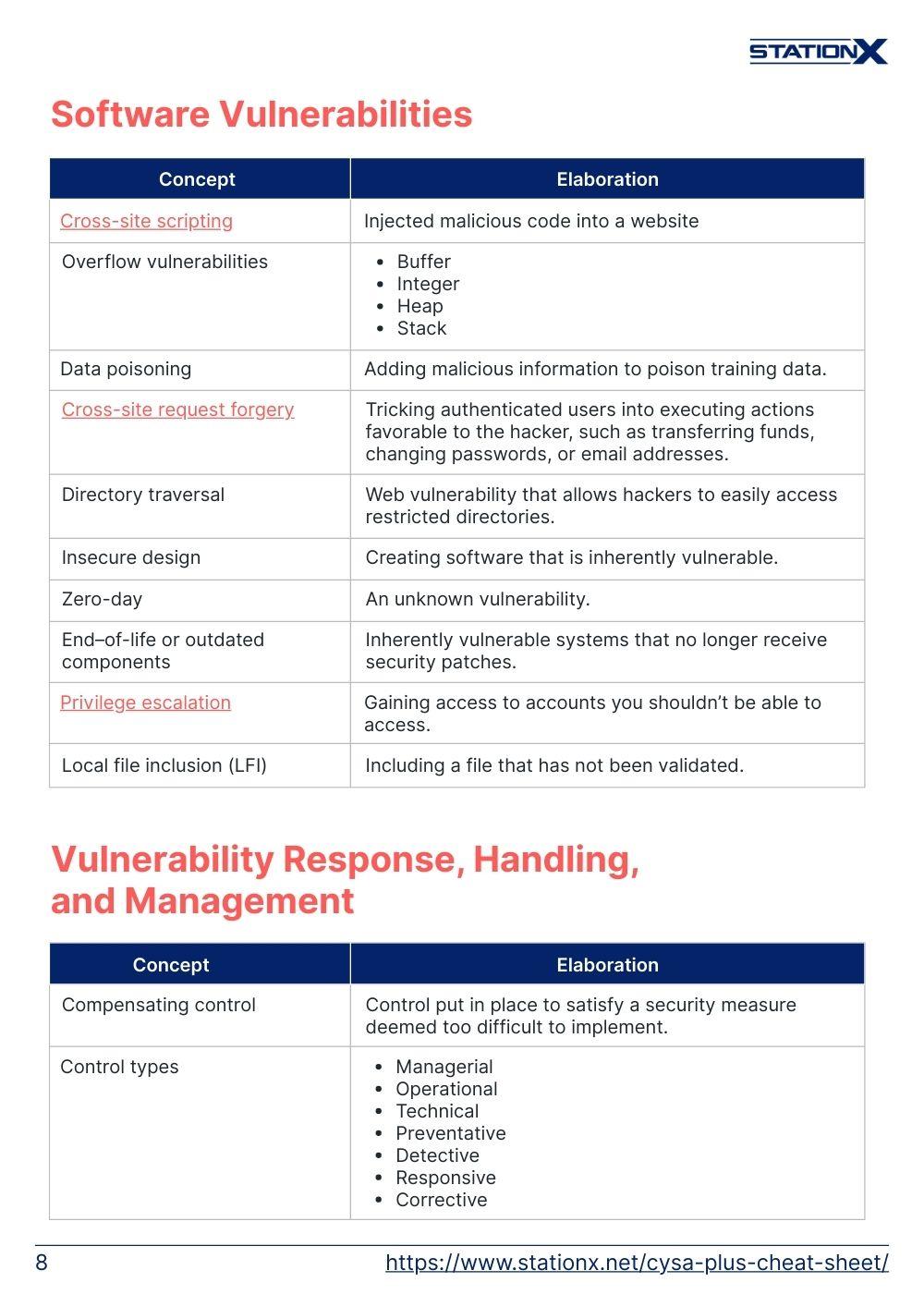
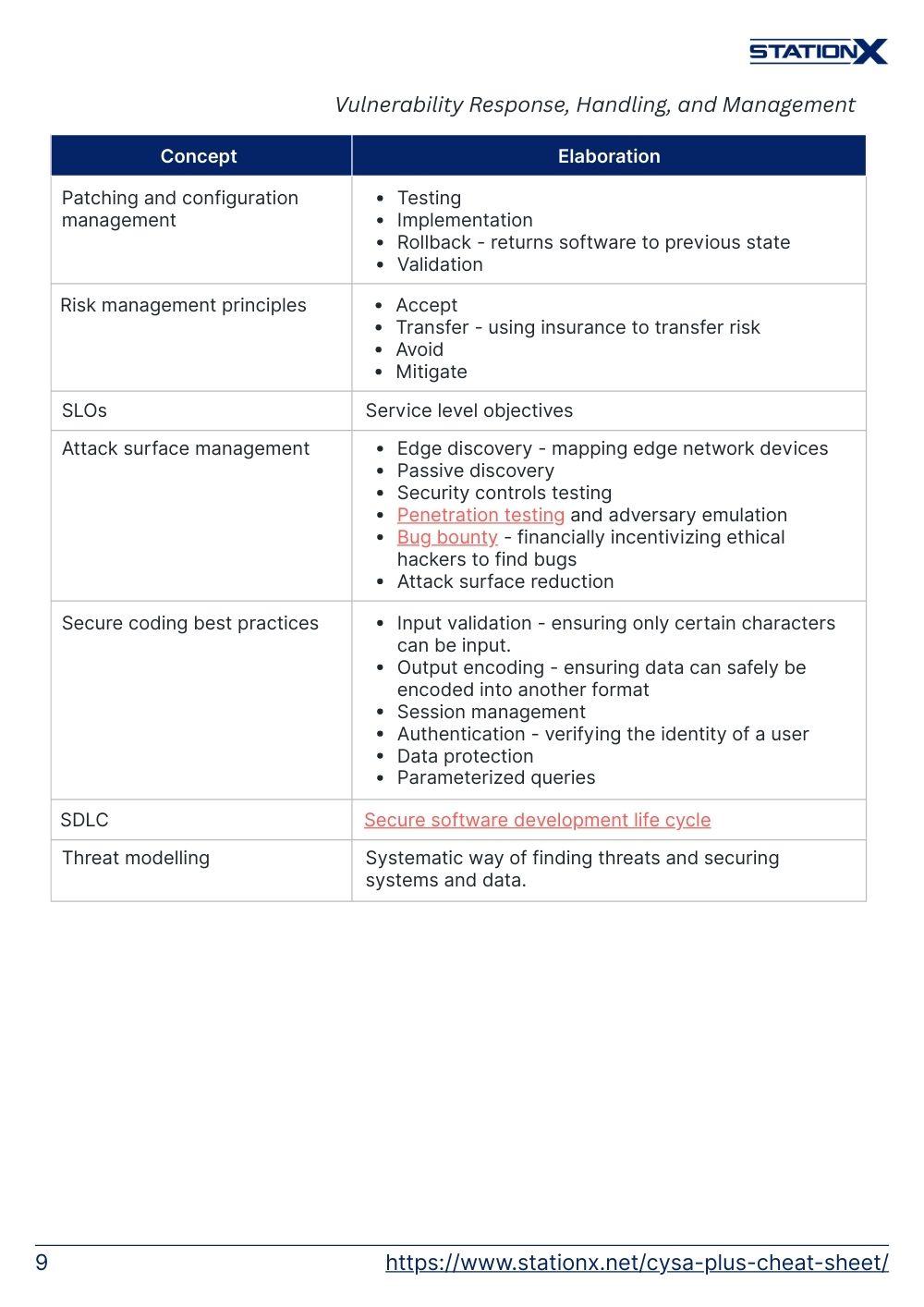
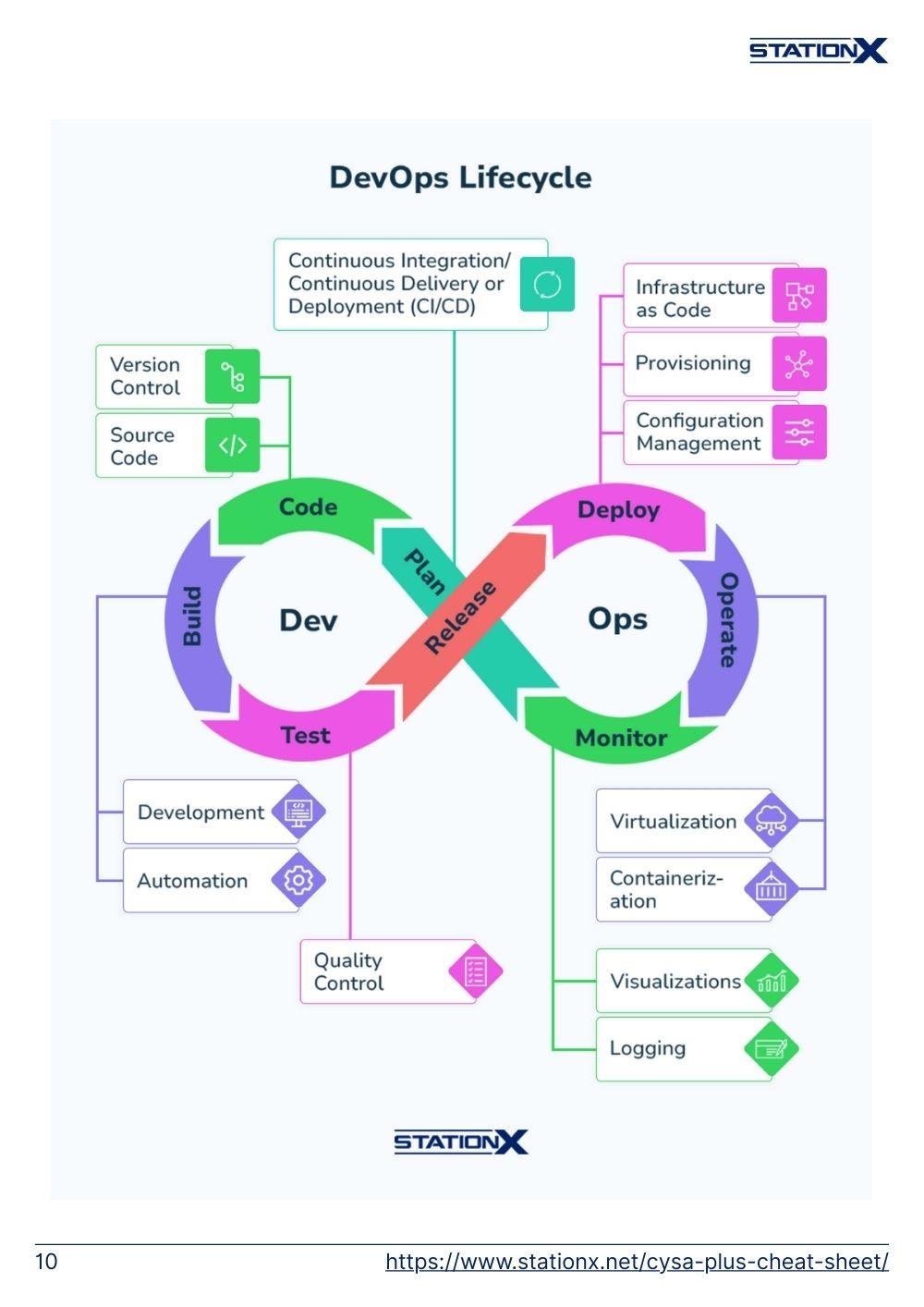
- Vulnerability Management (30%)
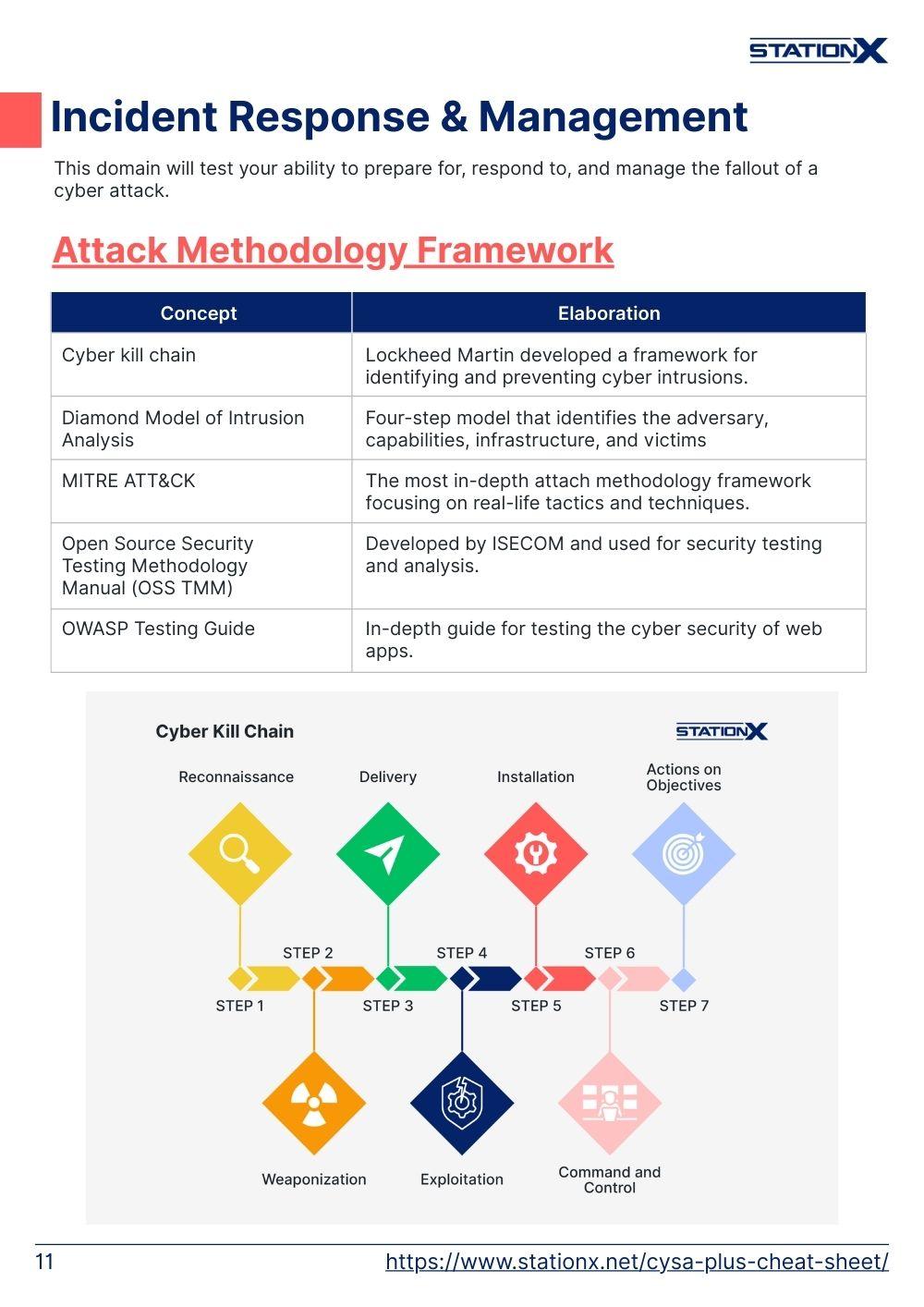
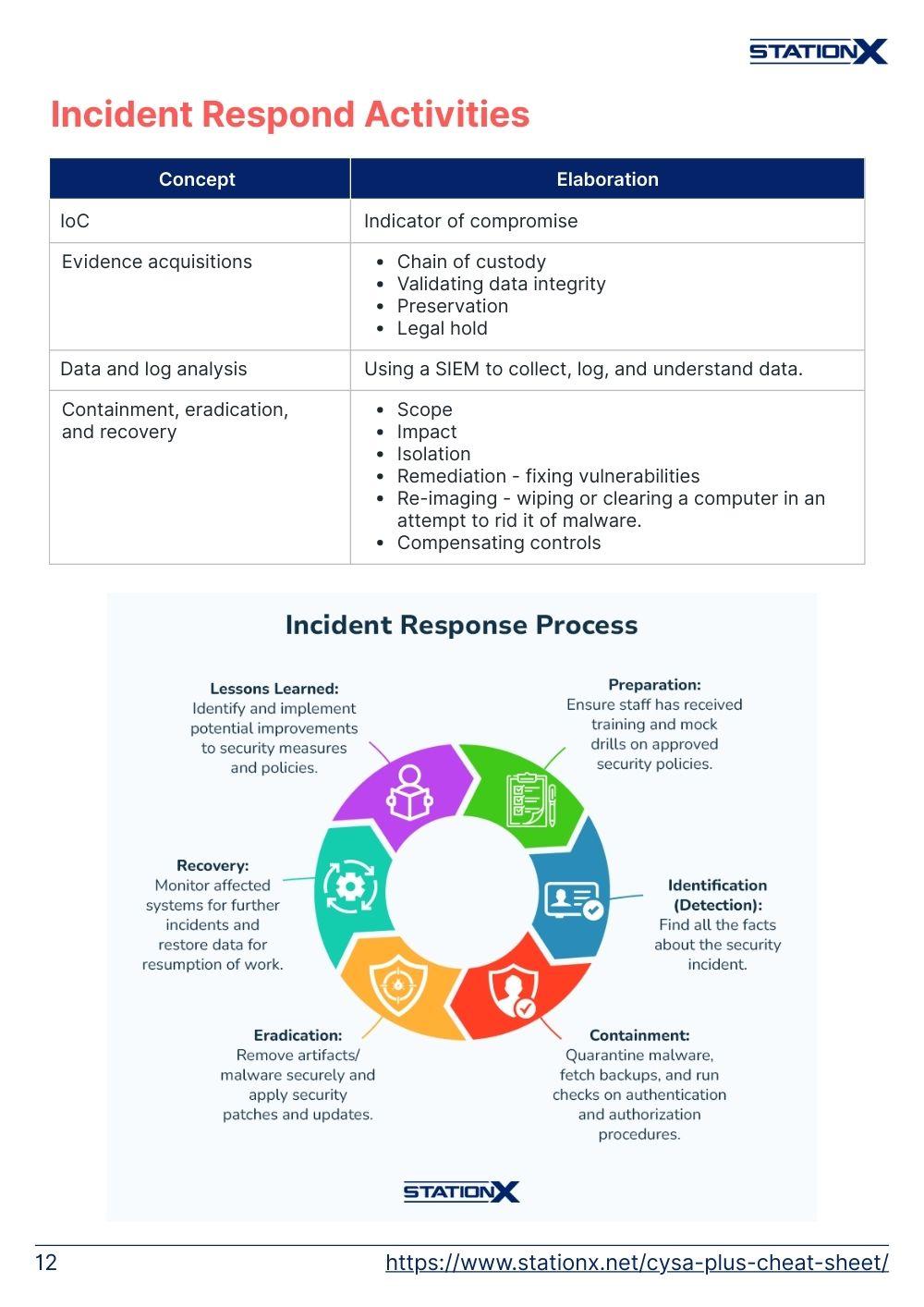
- Incident Response and Management (20%)
- Reporting and Communication (17%)

Further details can be found in CompTIA’s CySA+ exam cheat sheet.
Winner: Security+
In any qualitative CySA+ vs Security+ comparison under this heading, what we’re really interested in is certification scope.
At this early stage in your professional development, your security career could go down several broad routes. There’s the defensive track; i.e. jobs such as cyber analytics, where you’re focused largely on threat detection and response. There’s the offensive track; e.g. pentesting and ethical hacking. There’s also the general track, which combines offense and defense elements.
If you already know that you want to go down the defensive route, CySA+ is a really solid qualification for taking you down that track. Security+ doesn’t have that narrow vocational focus. It’s about building and verifying your knowledge across the broad cyber security landscape. For this reason, we believe it will have greater applicability to a wider range of students.
Eligibility Requirements
The good news is that there are no hard eligibility requirements for the Security+ and CySA+ exams. CompTIA is not going to ask you for proof of prior work experience or lower-tier accreditation before you enroll for either test.
CompTIA does, however, provide clear experience recommendations for each exam. You don’t want to waste your time and money attempting to gain a certification if you don’t have the requisite know-how to pass, so these recommendations shouldn’t be ignored.
That said, if you fall slightly short of CompTIA’s recommendations, don’t be too disheartened - or treat it as an automatic block. In many cases, self-study can be an effective way of bridging any experience gaps. We have course recommendations in the conclusion.
Security+
There are no prior work experience or lower-tier accreditation requirements to sit the Security+ exam.
CompTIA recommends that candidates should have at least two years of experience in IT administration with a security focus. Tip: if you fall short of this experience, a comprehensive training pack can help you fill in any missing knowledge.
CompTIA also stresses the value of having essential knowledge of networking and IT infrastructure before preparing for Security+. With this in mind, candidates are recommended to obtain the foundational CompTIA Network+ certification. We agree with this recommendation.
CySA+
There are no prior work experience or lower-tier accreditation requirements to sit the CySA+ exam.
It is recommended that candidates have at least four years of hands-on experience as an incident response analyst or security operations center (SOC) analyst or equivalent experience before embarking on prep.
Once again, CompTIA is referring to the knowledge of someone with that experience. Training and study can prepare you sufficiently for these exams even if you have never worked in these fields.
It is also recommended by CompTIA that candidates gain the Network+ and Security+ certifications first. This is solid advice.
Winner: Security+
Security+ is aimed at security professionals who are just starting out in their career. By contrast, CySA+ is really designed for people who have already built up a base of experience in security operations.
Remember, we’re talking about recommended experience rather than hard eligibility criteria here. However, it’s clear that more people are going to sit comfortably within the Security+ recommendations than those linked to CySA+.
Exam Difficulty
As we’ve seen already, CySA+ is aimed at a slightly more advanced audience than Security+ in terms of knowledge and experience. This is reflected in the difficulty levels for each exam.
Security+
Security+ is classed as an entry-level security exam. This doesn’t mean that it’s “easy” or that there isn’t much to cover. It refers to the fact that it covers the broad span of knowledge that would be expected of someone in a junior-level cyber security role.
When it comes to the knowledge expected of you, there’s quite a lot of content to get familiar with. This includes the basics on topics such as new and emerging threats, through to topline knowledge of security and privacy frameworks such as PCI-DSS and GDPR.
CySA+
CySA+ is designed for professionals to demonstrate that they have the skills and knowledge that would be expected of a security analyst or someone in a similar defensive security role. So compared to Security+, CySA+ is much more concerned with drilling into the operational detail.
There’s a strong emphasis on technical know-how. Within the domain of Security Operations, for instance, it’s not sufficient to simply know the difference between different types of malicious activity. You’ll need to go deeper and show that you understand how different types of activity can manifest themselves across an IT estate, and the indicators to watch out for.
Winner: Security+
Both of these exams are rigorous, and preparation is a must. Also, each one involves getting familiar with those hands-on PBQs referred to above; something that warrants plenty of practice if you’ve not encountered this type of question before.
CySA+ is the more advanced accreditation. And because it is more narrowly-focused on a particular vocational path, there is a more detailed body of technical information to absorb and learn. As such, most students will find Security+ easier to prepare for.
Job Opportunities
For an analysis of how well-regarded and how in demand each of these certifications are, we’ve carried out an up-to-date search of jobs via Indeed in the United States where each certification was mentioned or stipulated in the job spec.
Here are our findings:
Security+
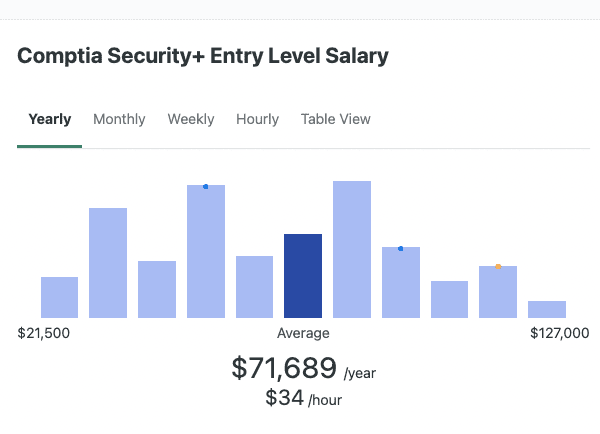
There are approx. 7,000 positions listed that cite CompTIA Security+ as required or desired.
These positions tend to span all categories of information security, including offensive and defensive roles. Examples of positions listed include the following:
- Cyber Security Manager - $110K–$145K
- Business Analyst - $75K–$95K
- Software Developer - $85K–$115K
- Security Consultant - $95K–$125K
- Cloud Security Engineer - $80K–$110K
- Penetration Tester - $75K–$100K
- Compliance Analyst - $70K–$90K
- Network Security Engineer - $85K – 115K
- Security Analyst II - $60K–$85K
For junior roles, it is common to find Security+ listed as either strongly-preferred or required. Here’s a fairly typical example:

For intermediate roles and upwards, it is common to see Security+ listed as part of a wider portfolio of preferred qualifications, as illustrated by this job with TikTok:

CySA+
There are approx. 400 positions listed that cite CompTIA CySA+ as required or desired.
As you would expect from this certification’s focus, jobs that mention it tend to be focused squarely on security analysis. Examples of positions listed and CySA+ salary ranges include the following:
- Security Analyst / Cybersecurity Analyst - $70K–$114K
- Security Operations Analyst - $85K–$105K
- Cyber Security Administrator - $75K–$100K
- Digital Forensic Examiner - $80K–$110K
- Incident Response Analyst - $90K–$120K
- Cyber Security Instructor - $80K–$115K
- Vulnerability Analyst / Threat Intelligence Analyst - $85K–$105K
- Risk Management or Compliance Analyst - $80K–$105K
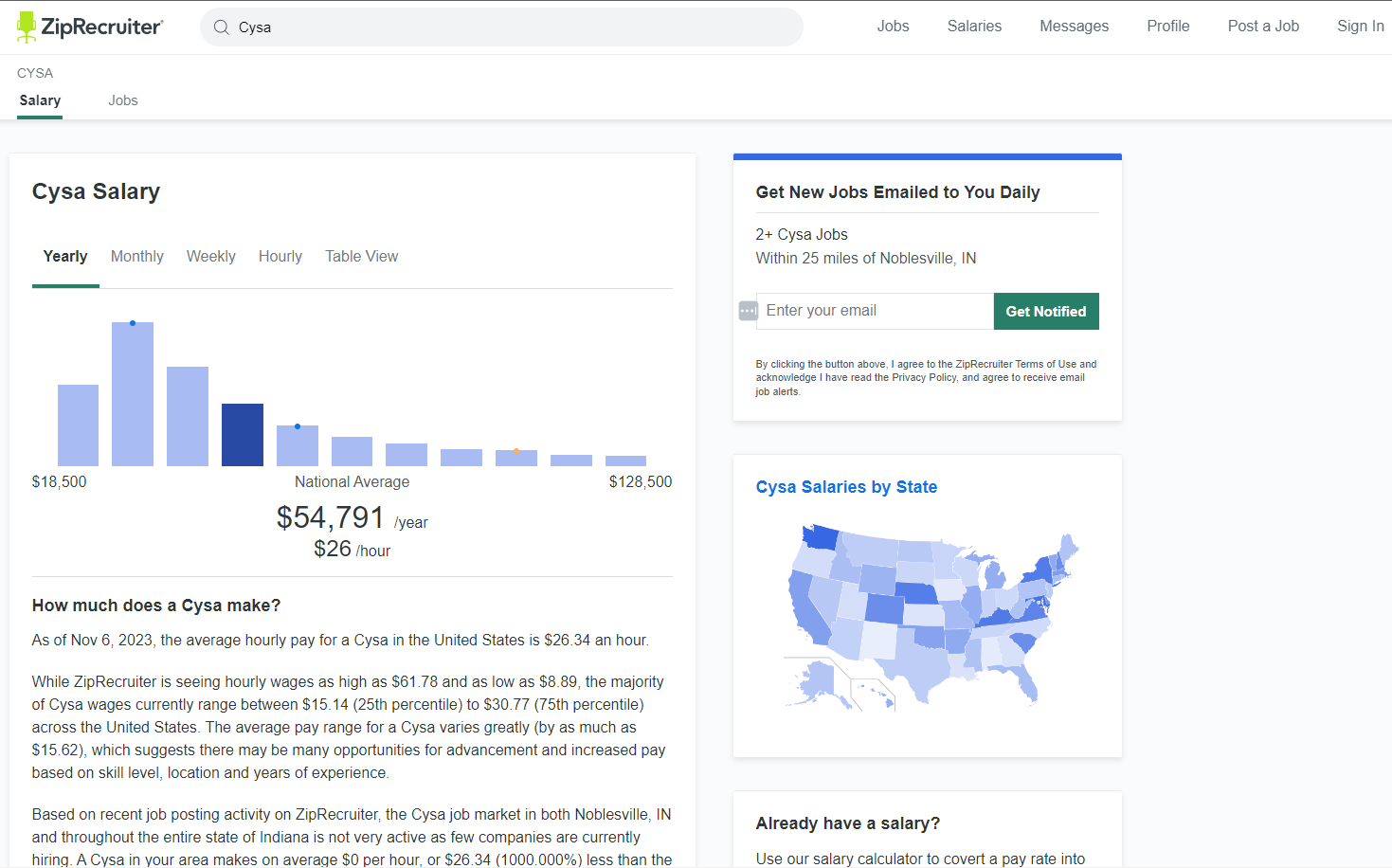
A typical example is as follows:

Winner: Security+
Security+ seems to enjoy vastly greater recognition among employers than CySA+. What’s more, this seems to be the case even for the type of defensive analytical roles that CySA+ was designed for. As such, we are naming Security+ as the clear winner in this category.
Cost and Recertification
Both certification exams have the same base cost of $425 USD with a renewal of $150 due every three years.
Both certificates are valid for a period of three years, after which they must be renewed either by retaking the exam, or earning educational credits, referred to by CompTIA as continuing education units (CEUs).
Broadly, these CEUs can be earned by taking other security courses, earning certifications or participating in industry events, conferences, and publishing. For Security+, you need 50 credits within the three-year period. For CySA+, the requirement is 60 credits. More information on this is contained in CompTIA's renewals guide.
Note that earning a higher-level CompTIA certification fully renews lesser ones both in terms of cost and CEUs. For example, earning CySA+ will renew your Security+ certification completely without needing to pay the $150 fee or earn additional CEUs. PenTest+ or SecurityX will renew your CySA+ and Security+ at the same time.
Winner: Security+
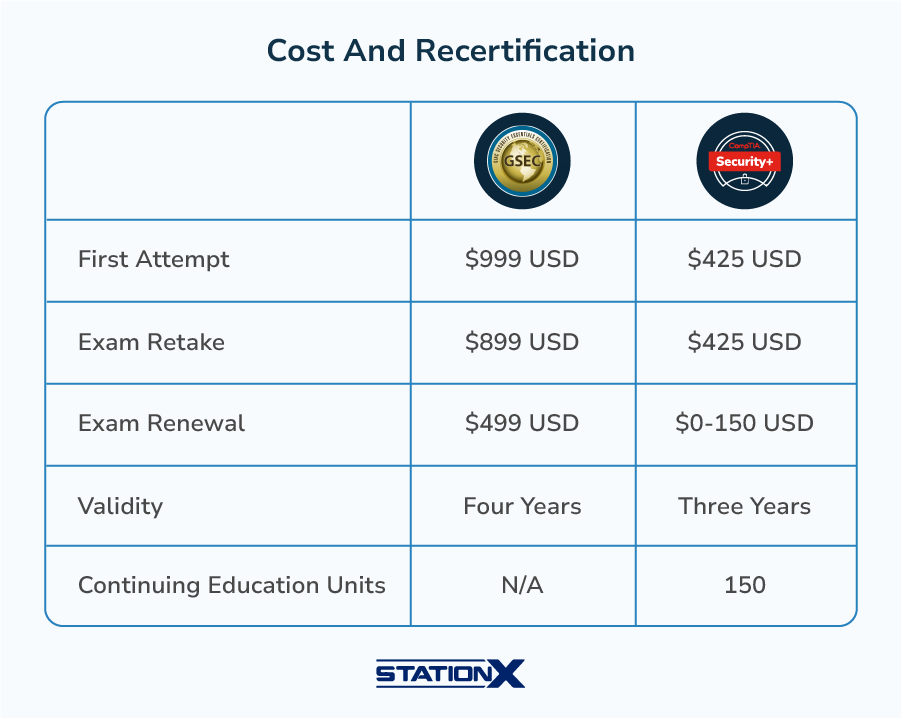
The upfront cost of each certification is the same. The only difference between them is that CySA+ demands slightly more effort in terms of continuing professional education to maintain it.
CySA+ vs Security+: Final Verdict

If you asked ten security professionals about Security+, nearly all would know it. The same can’t be said for CySA+.
Overall, Security+ comes out ahead. It’s globally recognized, easier to pass, and strengthens your credentials whether you pursue offensive or defensive security. CySA+ is valuable if you want to specialize in security analytics, especially alongside Security+, but on its own, Security+ remains the more versatile and widely recognized certification.
Ready to get certified? Build a solid foundation and real exam confidence with our CompTIA Security+ Course & SY0-701 Practice Test Bundle, and save up to 30% on your Security+ voucher through StationX.
If analytics is your focus, our CompTIA CySA+ Training Bundle will help you develop hands-on skills in threat management, vulnerability assessment, incident response, and digital forensics, also with up to 30% off your CySA+ voucher.
And if you want a comprehensive learning path, consider joining the StationX Master’s Program. You’ll gain access to over 30,000 courses and labs, personalized roadmaps, live training taught by award-winning industry experts, plus the practical skills you need to build a successful cyber security career.


The CompTIA Security+ Course & SY0-701 Practice Test Bundle includes:
- CompTIA Security+ Study Guide: SY0-701 Total Course
- CompTIA Security+ Training: Self-Paced Course
- CompTIA Security+ SY0-701 Exam Questions and Answers
- CompTIA Security+ Practice Test Series: Ace the SY0-701
- CompTIA Security+ Exam Objectives Flash Cards: SY0-701 Prep
The CompTIA CySA+ Training Bundle (CS0-003) includes:
- CompTIA CySA+ Study Guide: CS0-003 Total Course
- Ultimate CompTIA CySA+ Practice Test (CS0-003)
- CompTIA CySA+ Exam Objectives: Practice Flash Cards

Guarantee Your Cyber Security Career with the StationX Master’s Program!
Get real work experience and a job guarantee in the StationX Master’s Program. Dive into tailored training, mentorship, and community support that accelerates your career.
- Job Guarantee & Real Work Experience: Launch your cybersecurity career with guaranteed placement and hands-on experience within our Master’s Program.
- 30,000+ Courses and Labs: Hands-on, comprehensive training covering all the skills you need to excel in any role in the field.
- Pass Certification Exams: Resources and exam simulations that help you succeed with confidence.
- Mentorship and Career Coaching: Personalized advice, resume help, and interview coaching to boost your career.
- Community Access: Engage with a thriving community of peers and professionals for ongoing support.
- Advanced Training for Real-World Skills: Courses and simulations designed for real job scenarios.
- Exclusive Events and Networking: Join events and exclusive networking opportunities to expand your connections.
TAKE THE NEXT STEP IN YOUR CAREER TODAY!


